
An Ancient Island in the Heart of the Mediterranean
Sicily, an island rich in history and culture, offers an extraordinary range of archaeological sites that bear witness to the civilizations that have left their mark over the centuries. From Greek temples to Roman theaters, Byzantine mosaics to Punic ruins, Sicily is like an open-air museum. In this article, we will explore five unmissable archaeological sites that represent some of the island’s most significant treasures.


Valley of the temples in agrigento
Directions to: Valley of the temples in Agrigento
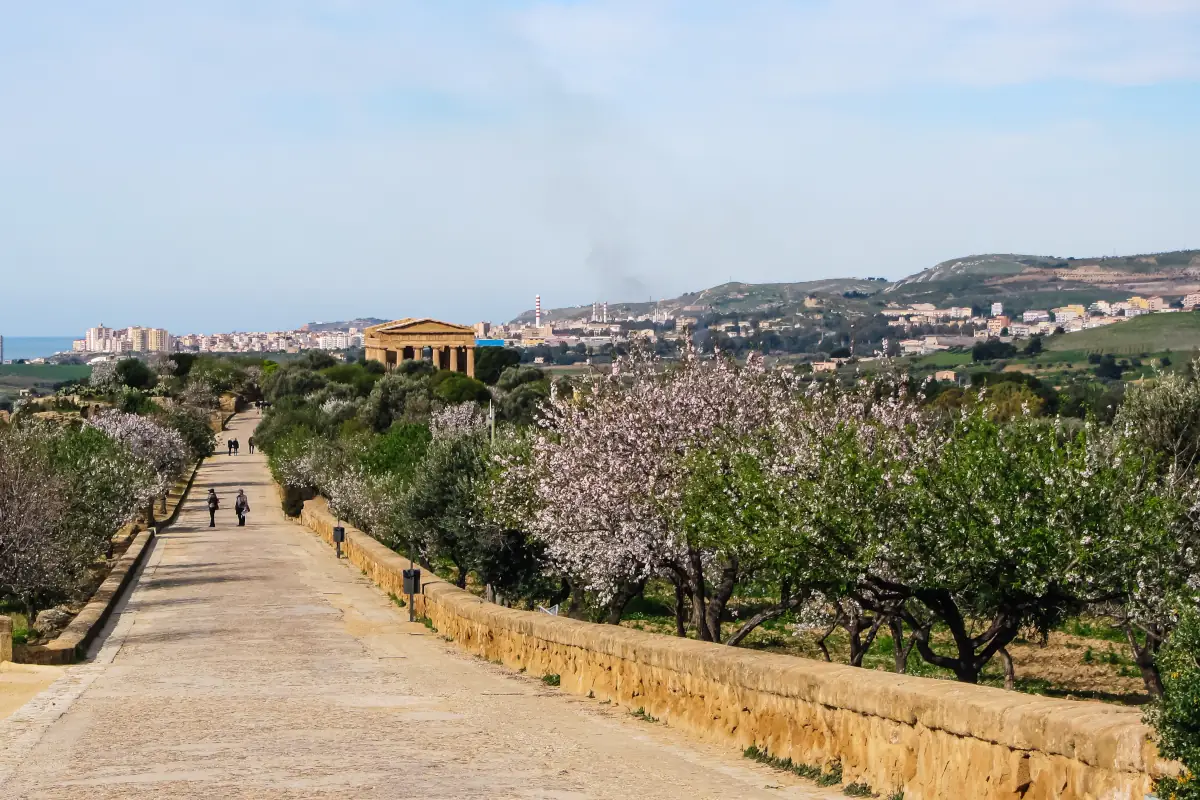
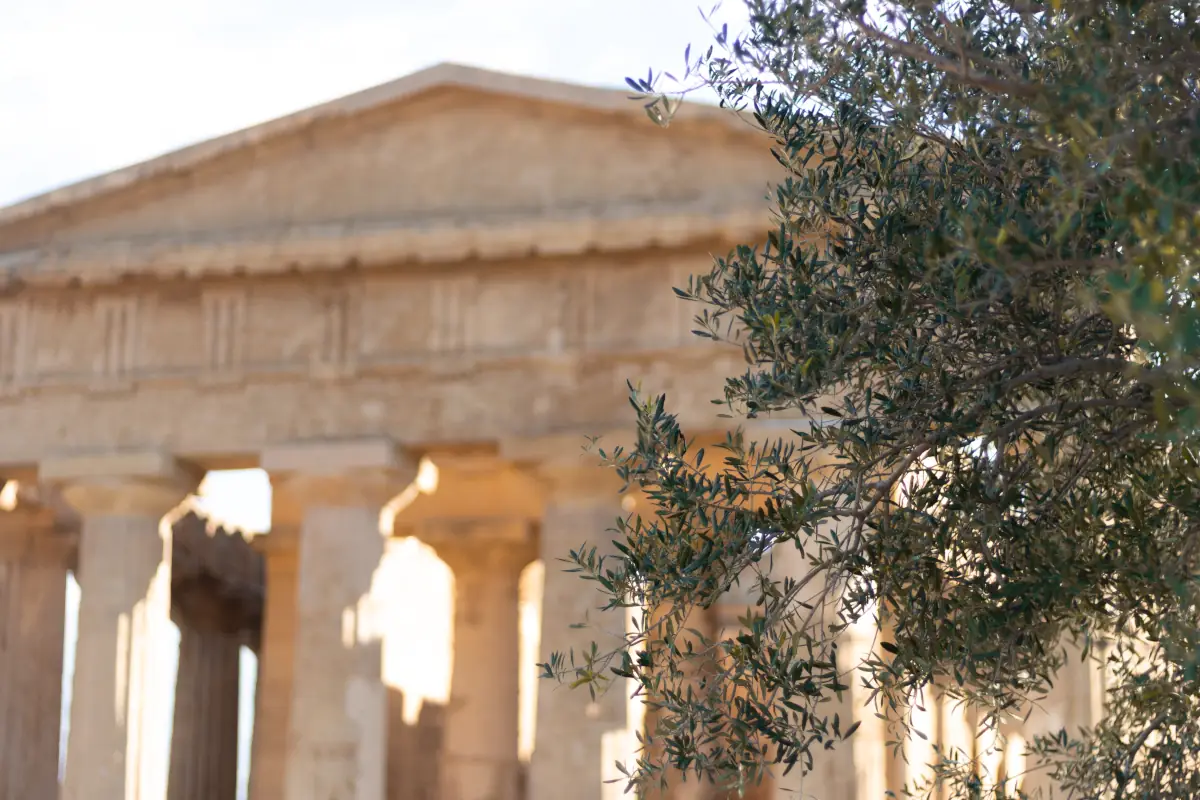
The Valley of the Temples in Agrigento is one of the most famous and spectacular archaeological sites in the world. This extraordinary complex of Doric temples dates back to the 5th century BCE and includes eight temples, among them the Temple of Concordia, which is the best-preserved and considered one of the finest Greek temples in the world. The grandeur of these temples, surrounded by a stunning landscape, offers a unique and unforgettable experience.
In-depth:
The Temples in Agrigento, also known as Akragas in antiquity, is one of the most important and evocative archaeological sites in Sicily. Founded around the 6th century BCE by Greek colonists from Gela, Agrigento became one of the wealthiest and most powerful centers of Magna Graecia.
During the city’s golden period in the 5th century BCE, magnificent Doric temples were erected, which still dominate the landscape today. The construction of these temples was a manifestation of the city’s grandeur and power, not only from a religious perspective but also politically and economically.
The Temple of Concordia, one of the best-preserved temples in the entire complex, was built around 440 BCE in honor of the Greek goddess of concord, Eirene. Its architecture is a perfect example of the Doric style, with massive and slender columns that exude a sense of grandeur and magnificence. The Temple of Concordia has been incredibly well-preserved due to its transformation into a Christian church in the 6th century CE, which helped protect it from damage and looting.
Another significant temple in the Valley of the Temples is the Temple of Juno, dedicated to the goddess of love and fertility. Built around 450 BCE, the temple features a majestic facade with six columns on the front and fourteen on the long side. This monumental structure bears witness to the wealth and cultural importance of Agrigento during the classical period.
During the period following Greek domination, Agrigento fell under the control of the Carthaginians, Romans, Byzantines, Arabs, and Normans. Each domination left its mark on the city and the archaeological complex. However, over the centuries, the Valley of the Temples also suffered damage and looting, and many of its artworks and decorations were taken away.
It was only in the 19th century that excavation and restoration work began, leading to the rediscovery and recovery of much of the site. Today, the Valley of the Temples is recognized as a UNESCO World Heritage site and is one of the main tourist attractions in Sicily.
A visit to the Valley of the Temples offers a unique opportunity to immerse oneself in the rich history of Magna Graecia and admire the ingenuity and aesthetics of the Doric temples. Walking among these ancient ruins, one can easily sense the atmosphere of a bygone era and appreciate the legacy left by the Greeks in Sicily.
Villa romana del casale in Piazza Armerina
Directions to: Villa romana del casale in Piazza Armerina
The Villa Romana del Casale, located near Piazza Armerina, is famous for its remarkably well-preserved Roman mosaics. Built in the 4th century CE, this Roman villa was buried by a landslide and only discovered in the 20th century. Its mosaics, covering an area of over 3,500 square meters, are a true spectacle of colors and artistic refinement, depicting mythological scenes, circus games, and daily life.
In-depth:
Historical Background on the Villa Romana del Casale in Piazza Armerina:
The Villa Romana, situated near Piazza Armerina, is an extraordinary Roman residence dating back to the 4th century CE. The villa was built during the late Roman period and is renowned for its exceptional mosaics, making it unique in its kind.
The villa was accidentally discovered in 1929 when a part of the mosaic floor was found during agricultural work. Subsequently, extensive archaeological excavations were carried out in the 1950s and 1960s, revealing the entire villa.
The mosaics of the Villa Romana del Casale are among its most precious treasures. They cover an area of over 3,500 square meters and represent an extraordinary display of artistic and technical skill. These mosaics depict a wide range of subjects, including mythological scenes, hunting, circus games, everyday life, portraits, and much more. Every detail is executed with astonishing precision and vibrancy, using a variety of colors and materials.
The mosaics are significant not only for their aesthetic beauty but also for their historical and cultural value. They provide a valuable visual document on Roman life and society, showcasing aspects of daily life such as agricultural activities, sporting practices, religious traditions, and more.
The villa itself was a luxurious residence, likely belonging to a member of the Roman aristocracy. It extends over a vast area and includes not only residential rooms but also baths, courtyards, gardens, and service areas. Its complex and well-preserved structure offers visitors a unique opportunity to understand the life and organization of spaces in an ancient Roman dwelling.
Despite its exceptional mosaics, the Villa Romana del Casale was abandoned and buried by a landslide around the 9th century CE. Paradoxically, this natural event contributed to preserving the villa and its hidden treasures for centuries until their discovery in the 20th century.
Today, the Villa Romana del Casale is an important archaeological site and a premier tourist attraction. Its historical, artistic, and cultural significance is recognized internationally, as it has been included in UNESCO’s World Heritage List since 1997.
A visit to the Villa Romana del Casale offers a unique opportunity to immerse oneself in ancient Roman life and admire the art of Roman mosaics. Through these extraordinary artworks, one can gain a valuable window into the past.
The Greek Theatre of Syracuse
Directions to: The Greek Theatre of Syracuse
Located in the city of Syracuse, the Greek Theatre is one of the largest theaters of ancient Greece and is still used for theatrical performances and festivals. Built in the 5th century BC, the theater can accommodate up to 15,000 spectators. Its extraordinary acoustics and panoramic location overlooking the bay of Syracuse create a magical atmosphere. The theater has also witnessed the works of famous Greek playwrights such as Aeschylus, Sophocles, and Euripides.
In-depth:
The Greek Theatre of Syracuse is one of the most important archaeological sites in Sicily and represents an extraordinary testament to ancient Greek civilization. Built in the 5th century BC, the theater is located on the island of Ortigia, in the heart of Syracuse.
Syracuse itself was one of the most powerful and influential cities in Magna Graecia, rivaling Athens in its size and culture. During its period of greatest splendor, Syracuse was ruled by tyrants Gelo and Dionysius, who made the city a prominent cultural and political center. It was during the rule of Gelo that the Greek Theatre was built as a symbol of the city’s greatness and power.
The Greek Theatre of Syracuse is one of the best-preserved ancient theaters in the world. Its original structure, made of limestone, could accommodate up to 15,000 spectators and offered a panoramic view of the bay of Syracuse. Its extraordinary acoustics are still considered an example of excellence in the field of ancient theater architecture.
The theater was a venue for performance and entertainment, where tragedies, comedies, and musical shows were staged. Renowned Greek playwrights such as Aeschylus, Sophocles, and Euripides have certainly graced the stage of this theater, offering the audience of Syracuse exciting interpretations of their works.
Despite its Greek origins, the Greek Theatre of Syracuse underwent various transformations and influences over the centuries. During the Roman era, modifications and expansions were made to the theater to adapt it to the tastes and needs of the time. Subsequently, with the arrival of the Byzantines and the Arabs, the theater was used for different purposes, such as a fortress and a quarry for construction materials.
During the 19th century, the theater underwent significant restoration work that restored it to its original form. Today, the Greek Theatre of Syracuse is still used for theatrical and musical performances during the renowned Syracuse Festival, an event that attracts artists and spectators from around the world.
Visiting the Greek Theatre of Syracuse offers an extraordinary experience of connecting with ancient Greek culture and theater art. Walking among its ancient tiers, imagining the performances that took place thousands of years ago, allows one to immerse oneself in the unique atmosphere of a bygone era and appreciate the greatness and grandeur of ancient architecture.
Archaeological Park of Neapolis in Syracuse
Directions to: Park of Neapolis in Syracuse
Within the Archaeological Park of Neapolis, you will find some of the most important monuments of Syracuse. Among them, the Greek Theatre, the most famous one, but also the Roman Amphitheatre, built in the 2nd century AD, which could accommodate up to 16,000 spectators. Additionally, the park is home to the famous “Ear of Dionysius,” an artificial cave with a unique acoustic effect. The Archaeological Park of Neapolis is a must-visit for enthusiasts of antiquity.
In-depth: The Archaeological Park of Neapolis in Syracuse is one of the most important archaeological sites in Sicily and represents an imposing testament to the ancient history of the island. Neapolis, which means “new city” in ancient Greek, was the part of Syracuse reserved for religious activities and represented a spiritual and cultural center of prime importance.
Neapolis consisted of several monuments and points of interest, including the Greek Theatre, the Roman Amphitheatre, and the famous Ear of Dionysius.
The Greek Theatre of Syracuse, mentioned previously, was the centerpiece of theatrical activities and games in ancient Syracuse. Built in the 5th century BC, it could accommodate up to 15,000 spectators and was a significant attraction for citizens and visitors alike. Today, the theater is still used for theatrical and musical performances during the Syracuse Festival.
The Roman Amphitheatre, located within the Archaeological Park of Neapolis, is another important site to visit. Built during the Roman era in the 3rd century AD, the amphitheater had a capacity of about 15,000 spectators and was used for gladiatorial shows and theatrical performances. Its well-preserved elliptical structure offers visitors a clear view of the architecture and organization of performances in ancient Rome.
The Ear of Dionysius is an artificial cave located in Neapolis, famous for its extraordinary acoustic effect. According to legend, the tyrant Dionysius I of Syracuse used the ear as a prison and it is said that he would listen to the conversations of prisoners through the sound reverberation effect inside the cave. Today, visitors can personally experience the exceptional acoustic effect of the Ear of Dionysius.
Neapolis represented an important religious center in ancient Syracuse. In the archaeological park, there are numerous temples and sanctuaries dedicated to Greek and Roman deities. For example, the Temple of Apollo, built in the 6th century BC, was an important place of worship for the Greek deity Apollo. Other significant temples include the Temple of Athena, the Temple of Zeus, and the Temple of Serapis, which testify to the influence of different cultures and deities in the history of Syracuse.
Visiting the Archaeological Park of Neapolis offers a unique opportunity to explore the ancient history of Syracuse and admire the grandeur of Greek and Roman architecture. Walking among these monuments and historic sites allows visitors to immerse themselves in a unique atmosphere.
Segesta
Directions to: Segesta
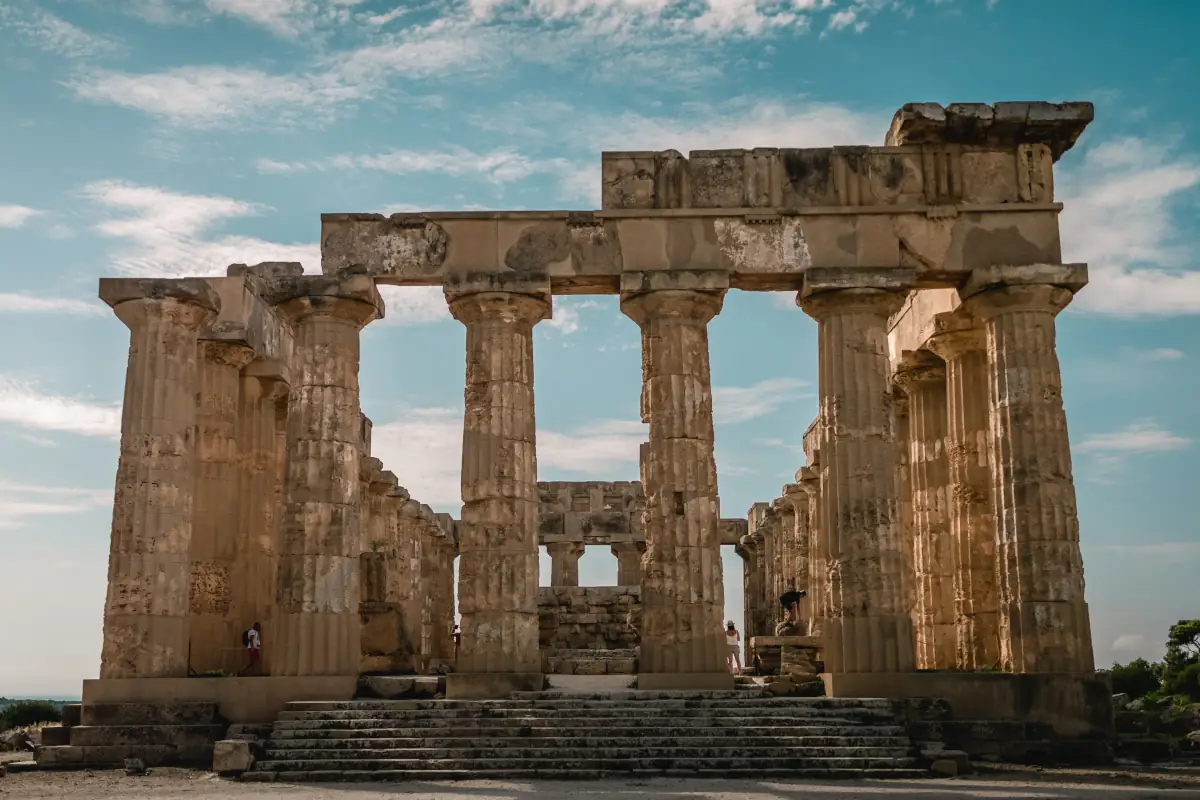
Segesta, located on the northwest coast of Sicily, is famous for its well-preserved Doric Temple and Greek Theater. The Temple of Segesta, dating back to the 5th century BC, is one of the finest examples of Doric architecture in Italy. The Greek Theater, situated on a hill with a panoramic view, is still used for theatrical and musical performances during the Segesta Festival. The combination of these two sites offers a complete immersion into the ancient history of Sicily.
In-depth: The Necropolis of Pantalica, located in the Anapo Valley, represents one of the most evocative and mysterious archaeological sites in Sicily. It is an ancient rock-cut necropolis dating back to the Bronze Age and Iron Age, containing over 5,000 tombs carved into the rock.
Pantalica was a settlement inhabited by the ancient Sicilian peoples, one of the indigenous populations of the island. The necropolis spans a vast area and provides a unique insight into the life and funerary traditions of these ancient communities.
The tombs of Pantalica are spread across different areas, created following the natural forms of the rocky walls. They are characterized by various types, including rock-cut tombs, chamber tombs, and pit tombs. Some of these tombs are adorned with engravings and mural paintings depicting scenes of daily life, religious symbols, and human figures.
The Necropolis of Pantalica offers an extraordinary testimony to the complexity of funerary practices and religious beliefs of the ancient Sicilian peoples. The rock-cut tombs were used for multiple burials, where bodies were interred along with their personal belongings and symbols of their earthly life. This aspect allows for the study of the social, religious, and cultural traditions of these ancient communities.
The Necropolis of Pantalica was not just a burial site but also an important inhabited center. The presence of settlements in the vicinity demonstrates that this area was densely populated. The remains of dwellings, roads, and fortifications testify to the organization and daily life of the ancient Sicilians.
The historical and archaeological significance of the Necropolis of Pantalica has been recognized by UNESCO, which included it in the World Heritage List in 2005. This archaeological site offers visitors a unique opportunity to immerse themselves in antiquity and appreciate the natural beauty of the surrounding landscape.
A visit to the Necropolis of Pantalica provides a captivating and fascinating experience, where one can explore the ancient tombs, admire the engravings and rock paintings, and delve into the history and culture of the Sicilian peoples. This archaeological site is a true treasure that allows us to connect with the deepest roots of Sicilian history.