

Introduction: Mackerel Fillets
This Mediterranean fish has always been an essential source of sustenance for the coastal populations of the island and remains a precious ingredient in traditional Sicilian cuisine today.
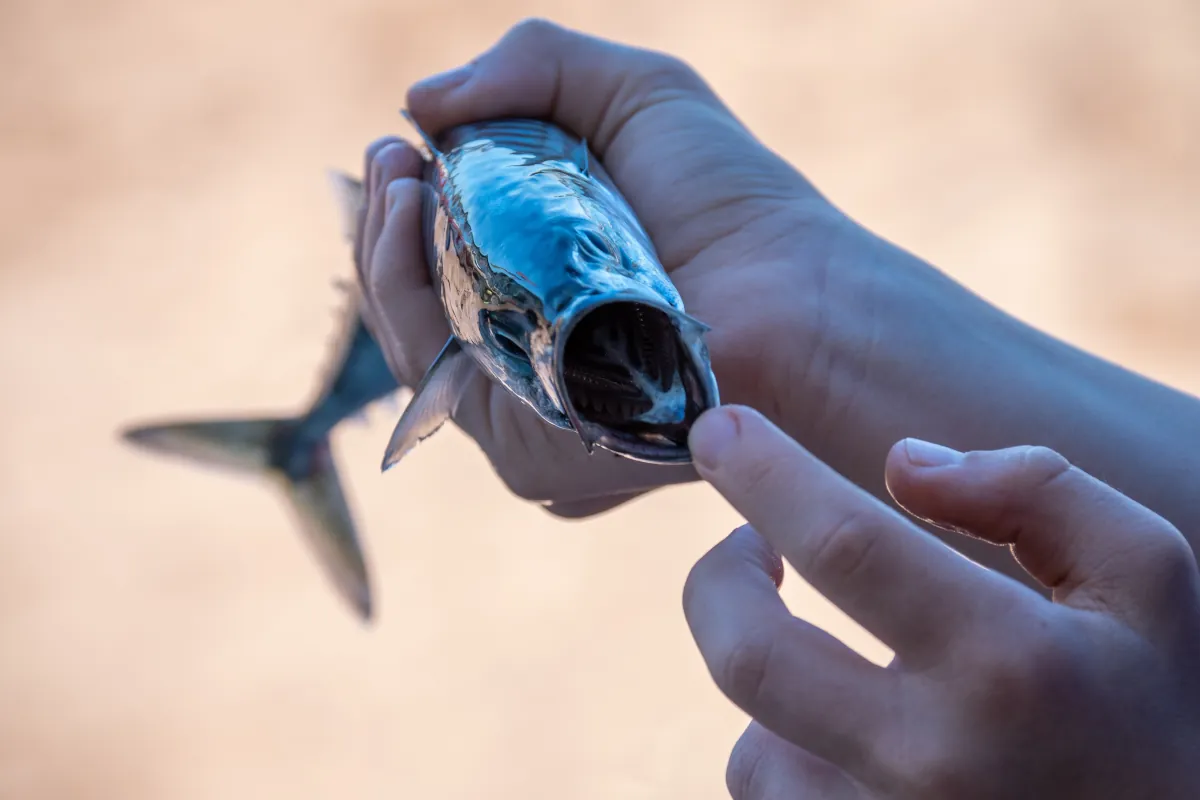
Mackerel, also known as « alaccia » in Sicilian, is a small-sized blue fish that mainly inhabits the Atlantic Ocean and the Mediterranean Sea. Its flesh is rich in proteins and omega-3 fatty acids, and its delicate and gentle flavor makes it ideal for a wide range of recipes.
Sicilian mackerel fillets are typically prepared with a few simple ingredients to highlight the delicate flavor of the fish. One of the most traditional recipes is « Sicilian-style mackerel fillet, » which uses cherry tomatoes, capers, olives, and garlic. Mackerel fillets are often marinated with lemon juice, olive oil, and aromatic herbs like oregano and parsley to enhance their taste.
Mackerel is also a versatile food that can be used in various ways, such as in salads, sandwiches, one-pot dishes, accompanied by rice or pasta. Moreover, being a blue fish, it is particularly rich in Omega-3 fatty acids, which are essential for our body and can protect the heart and circulatory system.
Properties of Mediterranean Mackerel
Sicilian mackerel fillets are a nutritious source of proteins, healthy fats, vitamins, and minerals.
Here are some of the nutritional properties of mackerel fillets:
Proteins: Mackerel fillets are rich in proteins, which are essential for growth, repair, and maintenance of body tissues, including muscles.
Healthy Fats: Mackerel is a source of omega-3 fats, particularly fatty acids like eicosapentaenoic acid (EPA) and docosahexaenoic acid (DHA). These fats are known for their heart-healthy benefits, including reducing the risk of heart diseases.
Vitamins: Mackerel fillets contain essential vitamins such as vitamin D, vitamin B12, and niacin (vitamin B3). Vitamin D is crucial for bone health and the immune system, while vitamin B12 is vital for red blood cell formation and nervous system function.
Minerals: They are a good source of minerals like selenium, which has antioxidant properties, and magnesium, which is important for various bodily functions, including muscles and the nervous system.
High-Quality Proteins: Mackerel is considered a source of high-quality proteins as it contains all essential amino acids required by the human body.
Low Mercury Contamination: Mackerel is generally considered a low-mercury fish, making it a safe choice for regular consumption.
Health Benefits: Thanks to its omega-3 fats and other nutrients, consuming mackerel can help reduce inflammation, improve heart health, and support brain function.
Note that mackerel fillets can be available in various forms, including fresh mackerel, canned, smoked, or in oil. The exact nutritional properties may vary slightly depending on the preparation and cooking methods.
Preservation of Mackerel Fillets and Sicilian Tradition
Mackerel fillets in oil are one of the most common and popular forms of fish preservation in Sicily. This preservation technique involves marinating mackerel fillets in olive oil, spices, and flavors for a period that can range from a few days to several weeks.
Marinating in olive oil serves to naturally preserve the fish and give it an intense yet delicate flavor. Olive oil, in particular, is an ideal ingredient for this type of preservation because it has antioxidant and antibacterial properties that help keep the fish fresh for longer.
The process for preparing mackerel fillets in oil is quite simple. Firstly, the fillets are cleaned and cut properly. They are then marinated in a mixture of olive oil, lemon juice, garlic, oregano, and other desired spices for a few days. Subsequently, the fillets are placed in sterilized jars and completely covered by the marinating oil.
Mackerel fillets in oil are a versatile and flavorful preserve that can be used in many recipes. They can be enjoyed as an appetizer, accompanied by toasted bread, or used as the main ingredient in salads, pasta, or one-pot dishes. Furthermore, being in oil, they have a longer shelf-life compared to fresh fish.
To fully enjoy mackerel fillets in oil, it’s important to choose quality ones made with high-quality olive oil and fresh, natural ingredients. Additionally, it’s essential to store the fillets in a cool and dry place.

Comment les filets de maquereau siciliens à l’huile peuvent-ils être servis ?
Les filets de maquereau siciliens peuvent être servis de plusieurs manières délicieuses et traditionnelles.
Voici quelques idées pour déguster les filets de maquereau siciliens :
- En apéritif : Les filets de maquereau à l’huile peuvent être servis en apéritif accompagnés de pain grillé ou de crostinis.
- En salade : Ils peuvent être utilisés pour préparer des salades de la mer, accompagnés de légumes frais et d’une vinaigrette légère.
- Sur des crostinis : Ils peuvent être utilisés comme garniture pour des crostinis chauds ou froids, accompagnés de ricotta ou de fromage frais.
- Dans les pâtes : Ils peuvent être utilisés comme ingrédient principal dans des plats de pâtes, comme des spaghettis aux palourdes.
- Comme plat principal : Ils peuvent être servis comme plat principal accompagnés de riz ou de pommes de terre au four.
- Comme garniture pour pizza : Ils peuvent être utilisés comme garniture pour les pizzas, accompagnés de mozzarella et de tomates cerises.
- Dans des sandwichs : Ils peuvent être utilisés comme ingrédient principal dans des sandwichs ou des petits pains, accompagnés de légumes frais.
- Dans des omelettes : Ils peuvent être utilisés comme ingrédient principal dans des omelettes, accompagnées de fromage frais.
Préparation des pâtes aux filets de maquereau à l’huile
Une des recettes les plus simples et savoureuses pour utiliser les filets de maquereau à l’huile est celle des pâtes au maquereau et aux câpres. Voici les ingrédients pour 4 personnes :
- 400 g de spaghettis ou de linguine
- 200 g de filets de maquereau à l’huile
- 2 gousses d’ail
- 1/4 de tasse de câpres
- 1/4 de tasse d’olives noires
- 1/4 de tasse de persil frais haché
- 1/4 de tasse d’huile d’olive
- Sel et poivre noir, selon votre goût
Procédure :
- Faire cuire les pâtes dans une grande quantité d’eau salée, en suivant les instructions de l’emballage.
- Dans une poêle, faire revenir l’ail dans l’huile d’olive jusqu’à ce qu’il soit doré.
- Ajouter les filets de maquereau à l’huile, les câpres, les olives noires et le persil. Bien mélanger et laisser cuire pendant 2-3 minutes.
- Égoutter les pâtes al dente et les ajouter à la poêle avec la préparation. Bien mélanger pour amalgamer les ingrédients.
- Servir chaud et assaisonner avec du sel et du poivre noir selon votre goût.
Cette recette est facile à préparer et offre une combinaison de saveurs délicates et intenses. Les filets de maquereau à l’huile apportent une saveur intense au plat, tandis que les câpres et les olives noires ajoutent une note d’acidité. Le persil frais, quant à lui, apporte une touche de fraîcheur et d’arôme.
Preparare la pasta con i filetti di sgombro sott’olio
Una delle ricette più semplici e gustose per utilizzare i filetti di sgombro sott’olio è quella della pasta con sgombro e capperi. Ecco gli ingredienti per 4 persone:
- 400 gr di spaghetti o linguine
- 200 gr di filetti di sgombro sott’olio
- 2 spicchi d’aglio
- 1/4 di tazza di capperi
- 1/4 di tazza di olive nere
- 1/4 di tazza di prezzemolo fresco tritato
- 1/4 di tazza di olio d’oliva
- Sale e pepe nero q.b
Procedimento:
Mettere a cuocere la pasta in abbondante acqua salata, seguendo le istruzioni sulla confezione.
In una padella, soffriggere l’aglio in olio d’oliva fino a quando diventa dorato.
Aggiungere i filetti di sgombro sott’olio, i capperi, le olive nere e il prezzemolo. Mescolare bene e lasciare cuocere per 2-3 minuti.
Scolare la pasta al dente e aggiungerla alla padella con il condimento. Mescolare bene per far amalgamare gli ingredienti.
Servire caldo e condire con sale e pepe nero a piacere.
Questa ricetta è facile da preparare e offre una combinazione di sapori delicati e intensi. I filetti di sgombro sott’olio donano un sapore intenso al piatto, mentre i capperi e le olive nere apportano una nota di acidità. Il prezzemolo fresco, invece, dona una nota fresca e aromatica.


